For Any Muslim Sister Seeking Clarity..
For Muslim Sister Seeking Clarity..
Discover These 5 Hidden Patterns That Reveal If He Is Truly Right And Compatible For The Life You Want... So You Can Reach A Clear Yes Or No Within 2-3 Conversations..
While also helping you see how he reacts under pressure, speaks about decisions, whether conflict brings maturity or ego, whether your voice truly carries weight, and subtle red flags become your daily reality.
NOTE: Written by a sister who almost said yes to the wrong man, and is grateful every day that she didn't.
Dear Sister,
Something in you already knows this is not a decision you can afford to rush.
This is your deen. Your daily life. Your future children. The person you will wake up next to for the rest of your life.
So when a proposal comes or when someone is in the picture, your mind does not simply stop at "Is he practicing?" or "Does he have a stable job?"
Something deeper keeps asking:
Is this really the person I want to build my entire life with?
Can I see myself being fully myself around him, my thoughts, my fears, my real opinions?
Do we actually share the same values around money, family, roles, and how decisions get made?
Will I feel like I have a real companion... or will I just be married?
Will I be able to laugh with him? Grow with him? Feel safe with him?
And then the one question that sits the heaviest:
What if he's a good man... but just not the right man for me?
Because the truth is…
You don’t really know him yet.
And there might be a part of you that feels guilty even thinking that way.
Because on the surface, nothing looks wrong.
There's a proposal to consider.
Or someone in the picture you're trying to figure out.
Either way, something keeps pulling you into the same exhausting cycle:
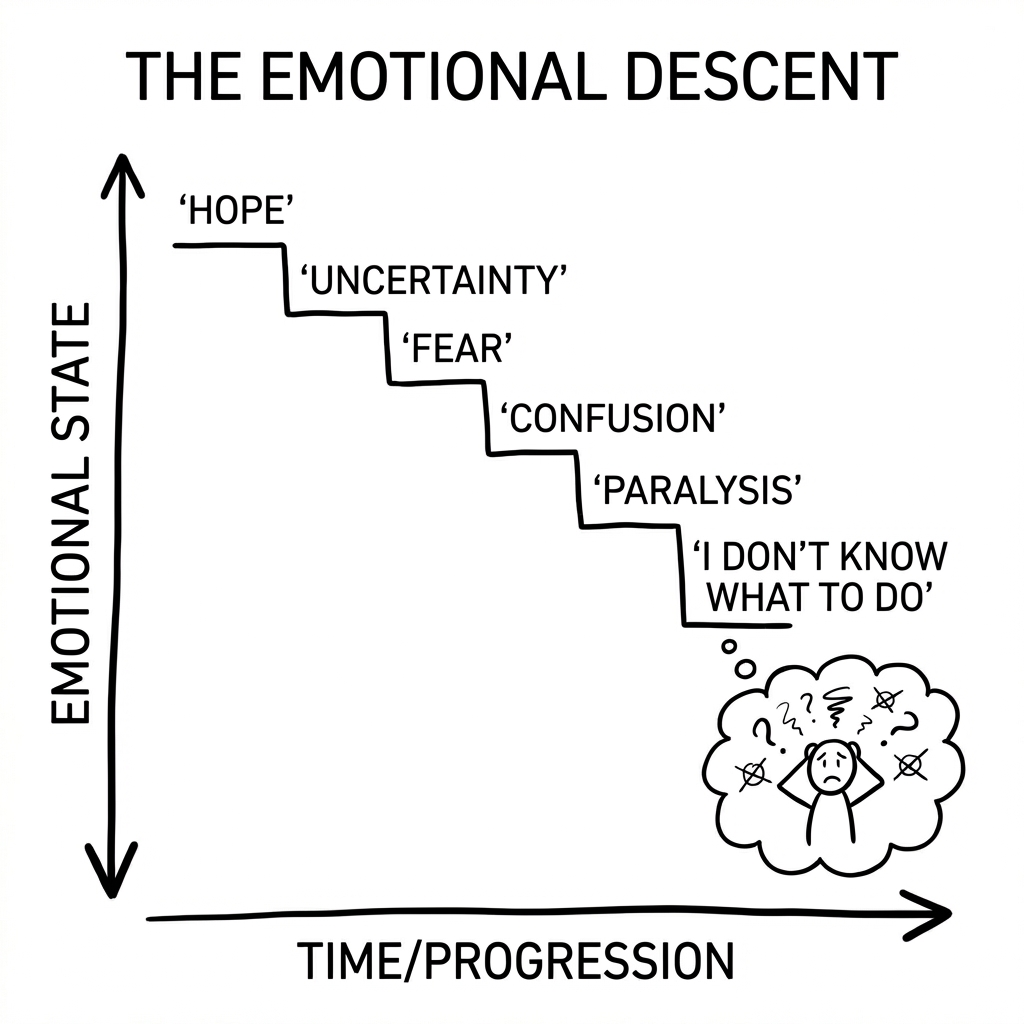
Hope → Uncertainty → Fear → Confusion → Paralysis → "I don't know what to do"
You've probably already prayed istikhara.
Maybe multiple times.
You've asked the questions people say to ask.
You've watched his behavior during the meetings you've had.
You've talked to family, close friends, married sisters you trust.
And still, the clarity just hasn't come.
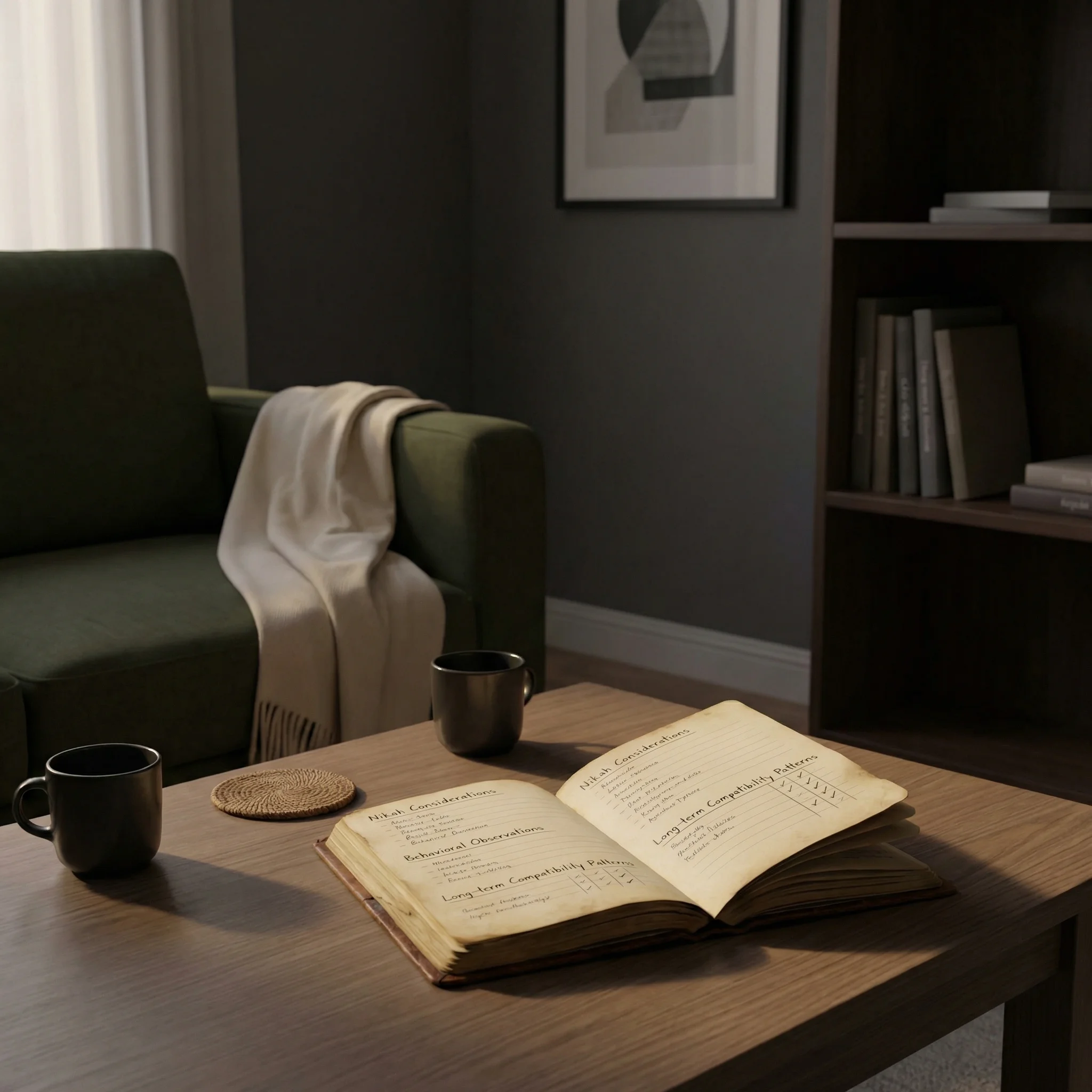
And that is, because polite meetings don't show you who someone really is.
Everyone around you has a different opinion.
Your family sees one thing.
Something in you senses another.
Your gut is saying something you can't quite put into words.
On surface, maybe everything looks fine.
✅ Deen? Yes.
✅ Job? Stable.
✅ Family? Respectable.
But marriage isn't lived like that.
It's lived in tone. In how he reacts when you disagree. In whether you feel heard or managed. In the small daily moments nobody talks about before nikah.
And that's what's still unclear.
The weight of this doesn't go away on its own.
Because something in you understands what's really at stake here.
This isn't just about compatibility.
This choice shapes your deen, your daily life, your emotional world, your future children, everything.
And somewhere in the back of your mind sits a fear that's hard to say out loud:
What if things look completely different after the nikah, when there's no more need to impress?
What if years go by and something in you feels unheard.
Managed instead of protected.
Present in the marriage, but not truly part of it.
That fear is real. And it deserves to be taken seriously.
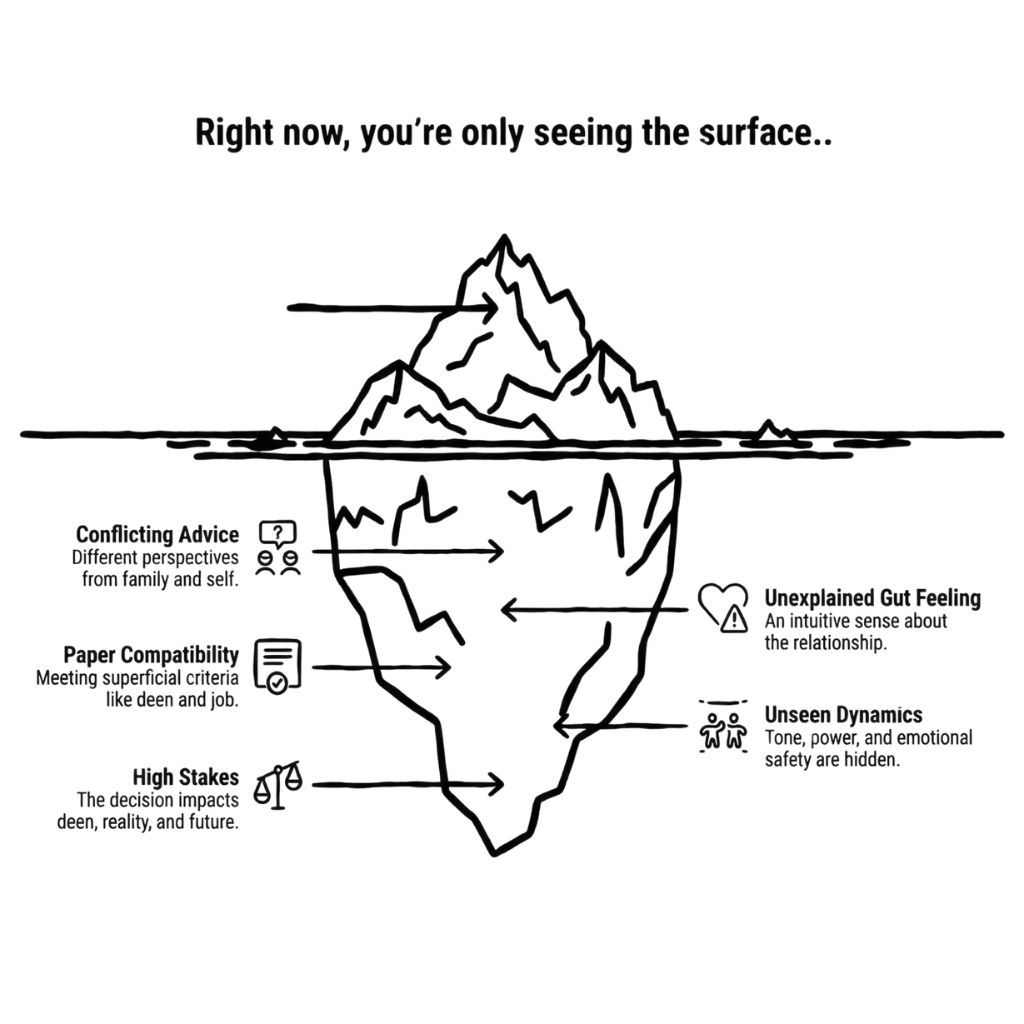
But here's what most sisters don't realize:
You don't have to wait until after nikah to see who he really is.
Why 'Just Pray About It' And 'Trust Your Gut' Often Leave You More Confused..
You've probably already received a lot of advice.
Pray istikhara.
Ask questions.
Watch his character.
Give it time.
Trust your gut.
None of that advice is wrong.
But none of it gives you what you actually need, a way to know.
And here's why the usual approach leaves so many sisters still stuck:
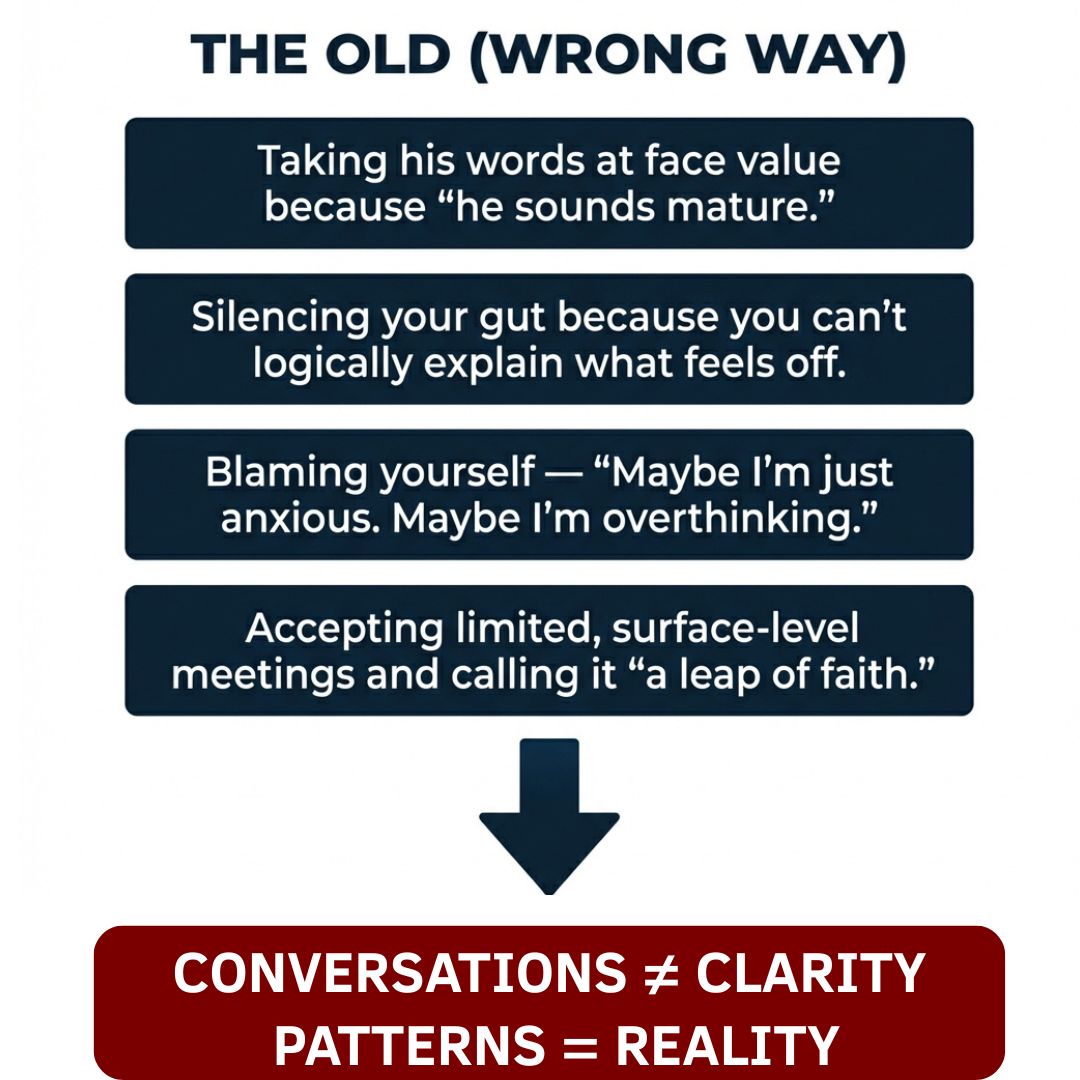
His answers all sound good. He says he values communication. He says he respects women. He says he wants partnership. Great. But how do you know if what he says matches what he will actually do?
You cannot trust your own gut. Sometimes you sense something is off but cannot explain what. Other times you wonder if you are just anxious. How do you know the difference between a legitimate warning and baseless fear?
Limited access feels like a wall. Brief meetings. Always chaperoned. Surface conversations. Everyone says you just have to take a leap of faith because "you cannot really know someone until after marriage anyway."
So you're left with information you don't know how to read, feelings you can't fully trust, and a decision that can't wait forever.
What You Actually Need...
More questions probably won't solve this.
More advice from well-meaning people probably won't either.
What would actually help is a way to understand what he'll be like after nikah, based on what's already visible right now, in the interactions you're already having.
And here's something most sisters never get told:
A man's real character shows up in patterns. And those patterns appear early within the first few real conversations, if you know what you're looking for.
Most sisters focus on collecting his answers to questions.
But answers can be prepared.
Answers can sound exactly right.
Answers show you what someone wants you to believe.
Patterns show you what's actually true..

The way he responds when you express a different view.
The specific words he reaches for when talking about roles and decisions.
How he reacts to a moment of gentle pushback.
Whether he makes space for your voice or quietly fills every gap with his own.
These moments are already happening.
You just need a way to read them.
This is what The Secret Pre-Nikah Alignment & Clarity Blueprint for Sisters was made for.
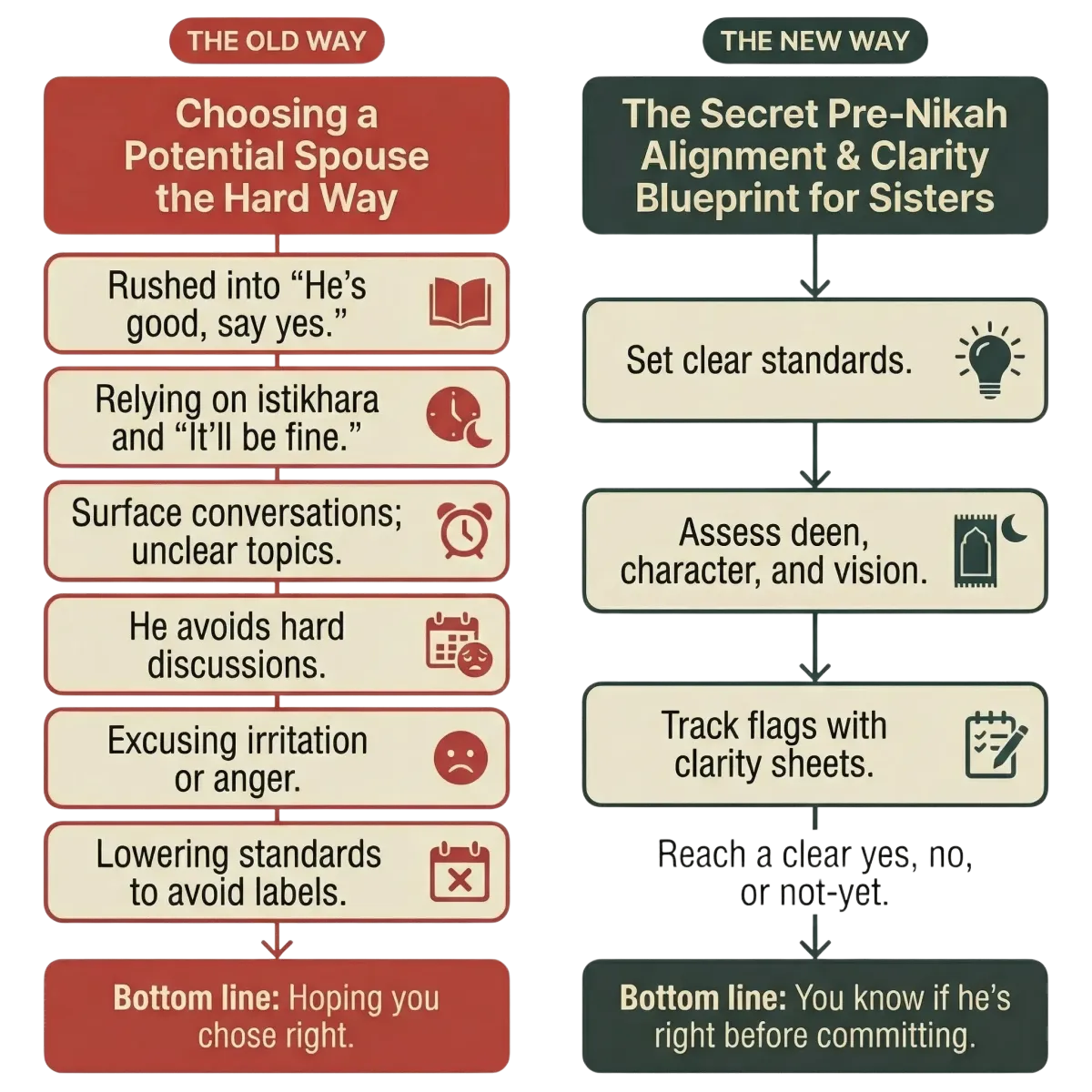
Not to give you more questions.
But to show you what behaviors, words, and small reactions already reveal about who he really is and what your life will actually feel like after nikah.
Once you can see the patterns, you see them quickly.
And once you see them clearly, something shifts.
The confusion lifts.
The decision starts to make itself.
NOW AVAILABLE FOR
INSTANT DIGITAL DOWNLOAD
Only three Days Left
Normal Price -$47
Only $9.95
Access The Secret Pre-Nikah Alignment & Clarity Blueprint for Sisters For Just $9.95! Delivered instantly.
Now Available For Instant Access
100% secure 256-bit encrypted checkout


What Is The Secret Pre-Nikah Alignment & Clarity Blueprint for Sisters?
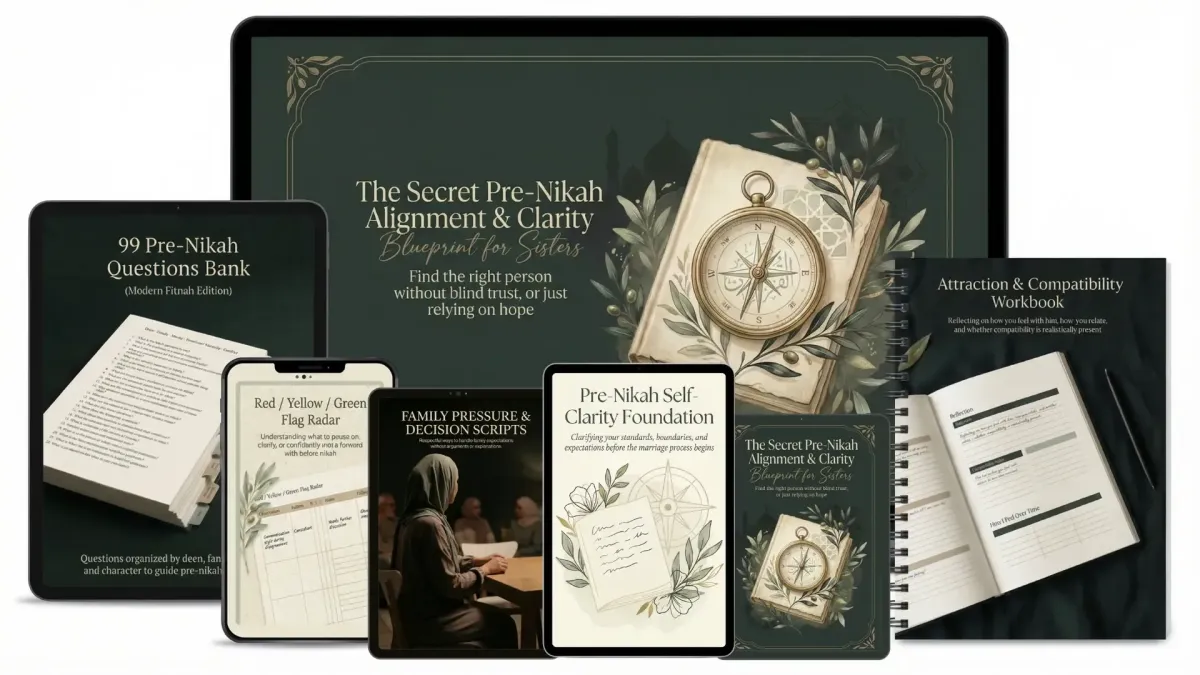
This blueprint identifies 5 specific patterns that determine what your marriage will actually feel like.
These patterns predict whether you will feel respected or restricted.
Whether you will have a companion or a stranger.
Whether problems get resolved or silently compound for years.
A Small Look Inside...
Pattern 1: Respect vs. Restriction
Most sisters try to evaluate this by asking "Do you believe in equality in marriage?"
He says yes.
Great.
And that answer doesn't tell you much on its own.
What actually reveals this pattern is how he talks about decisions.
Does he naturally reach for language like "we'll figure this out together" and "what do you think" and "let's discuss it"?
Or does something in his words carry a different tone, "I'll decide" and "trust me on this" and "I know what's best"?
When you bring up something that matters to you, your career, your education, how often you see your family, does he respond with genuine curiosity?
Or does something in how he responds quietly position him as the one who will permit or not permit it?
These small moments are already happening in your conversations.
The blueprint shows you the exact language patterns to notice, what they mean, and how to create a natural moment in conversation that brings this pattern to the surface.
Most sisters who go through this say they saw this pattern clearly within one or two interactions.
Not months. Not after engagement. Within conversations you're already having.
The other four patterns work the same way.
And here is the key:
This pattern shows up within one or two interactions if you know what to watch for...
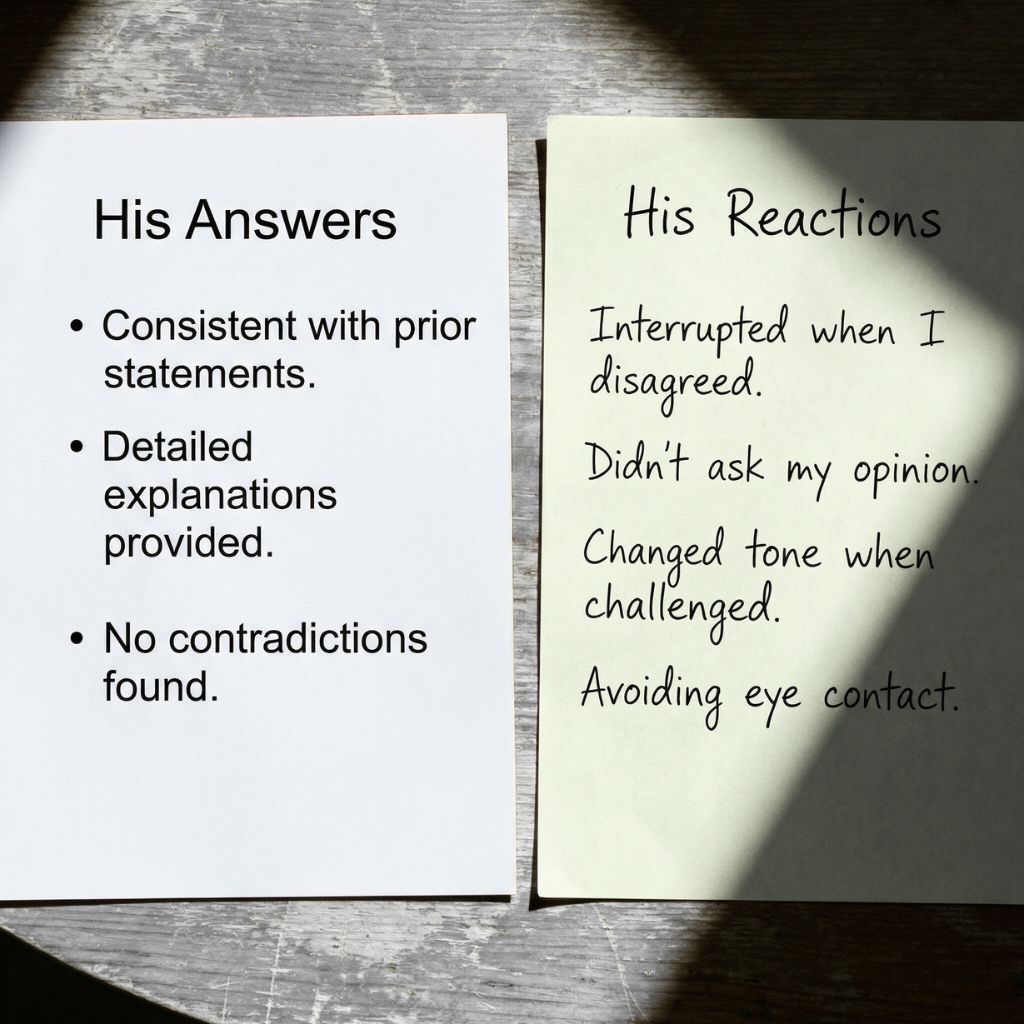
You do not need months.
You do not need private access.
You just need to know where to look.
The same is true for the other four patterns (which the blueprint breaks down the same way).
And more..
Once you can identify these five patterns, you know what your day-to-day life will look like after nikah.
Not based on hope.
Not based on what he claims.
Based on observable behavior that predicts future behavior.
This is how you move from "I don't know" to "I know".
Here’s Everything Included
6 bonuses included today
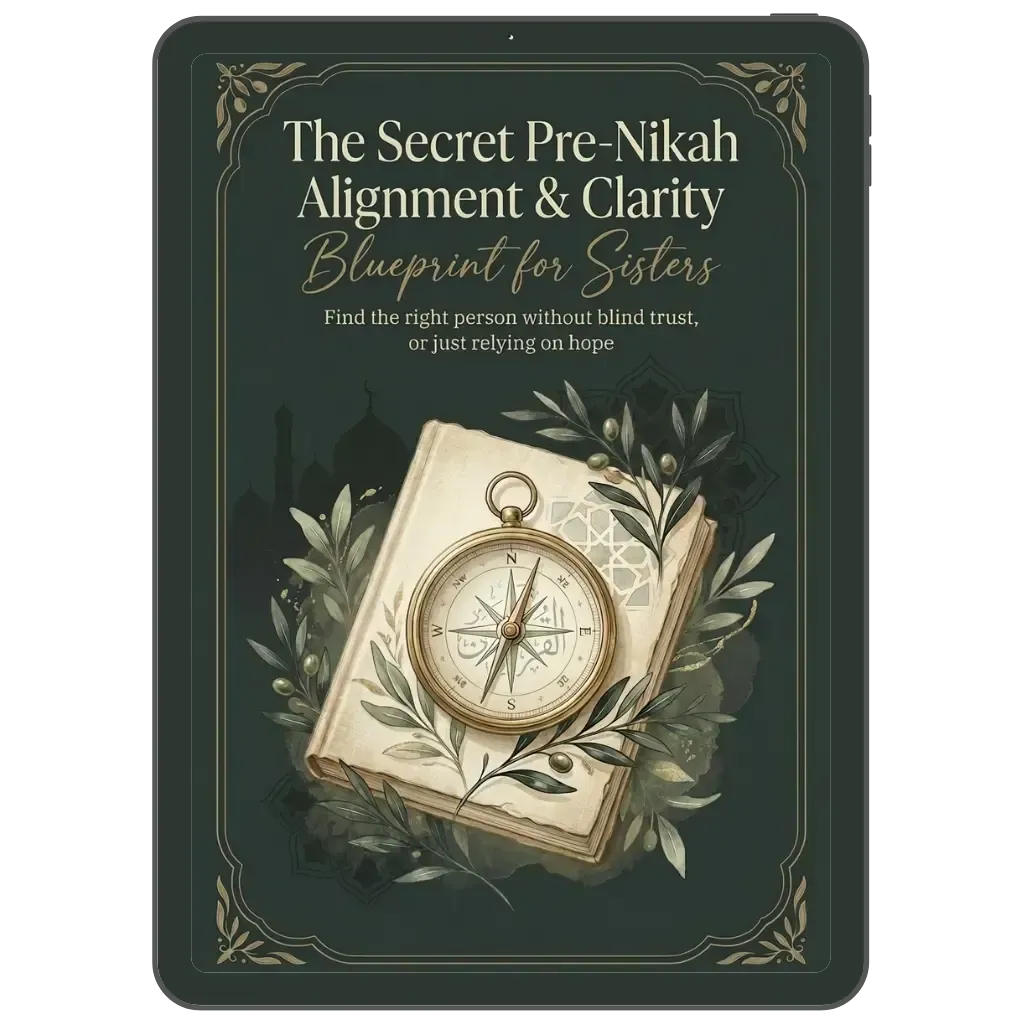
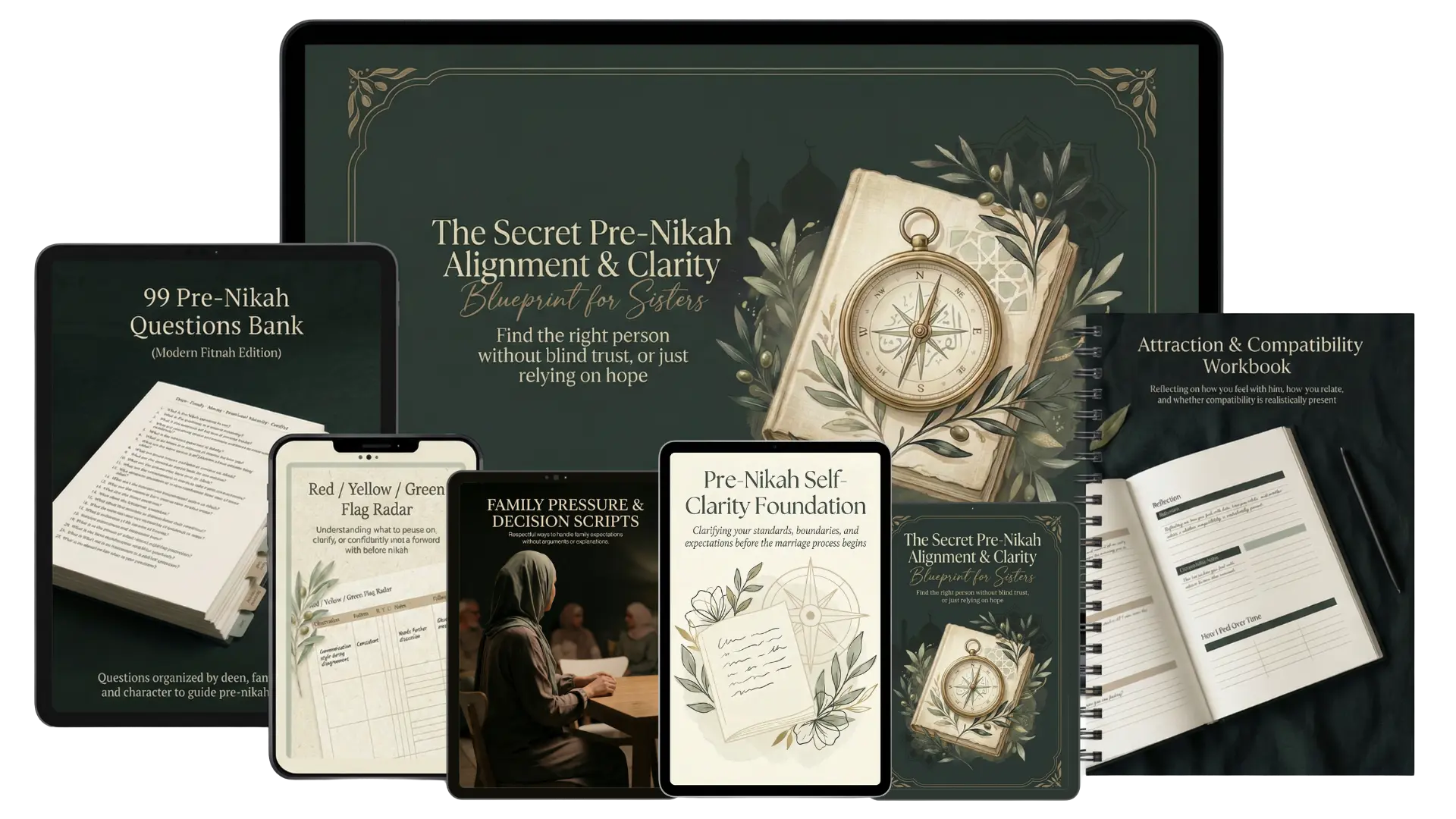
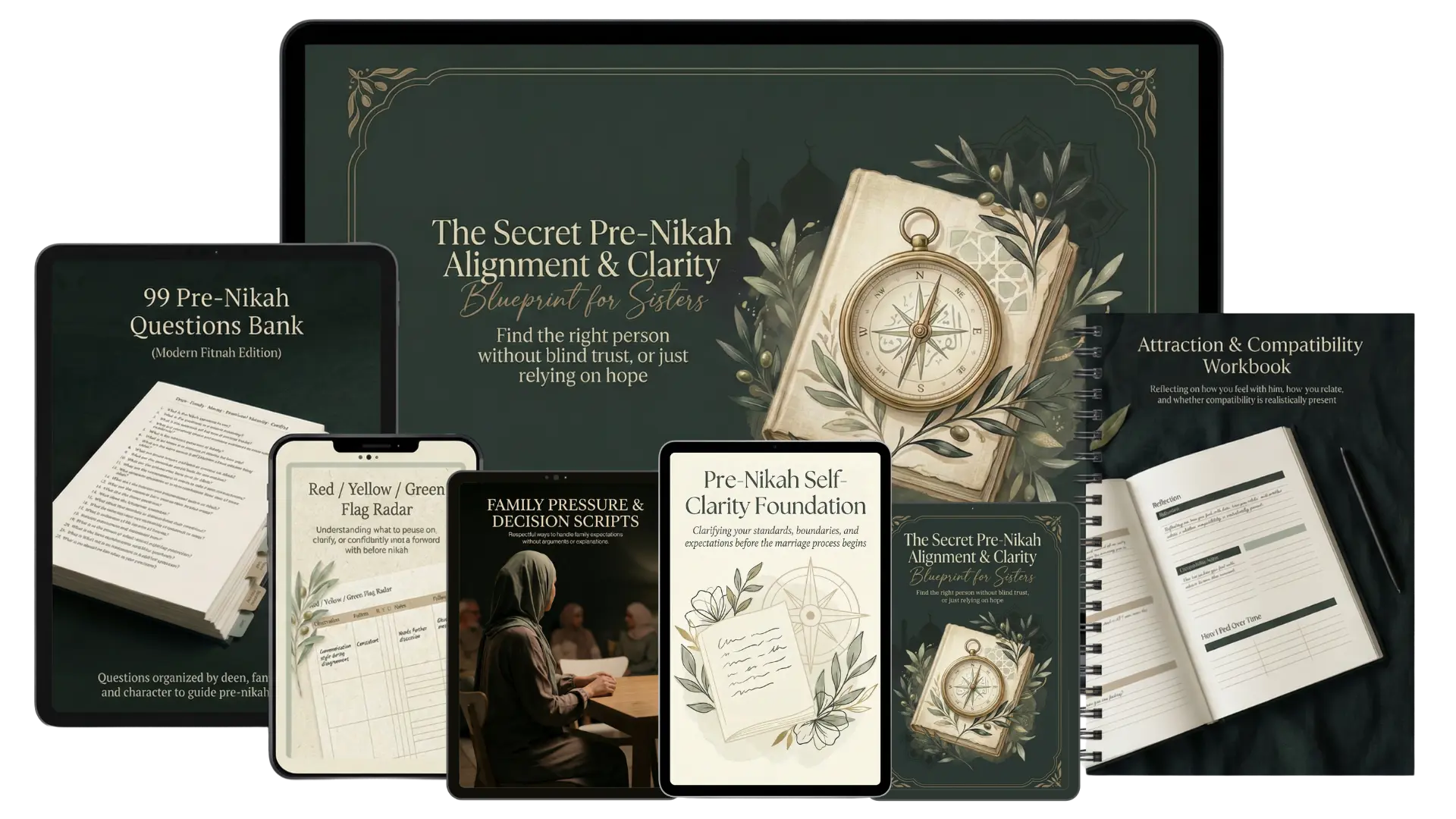
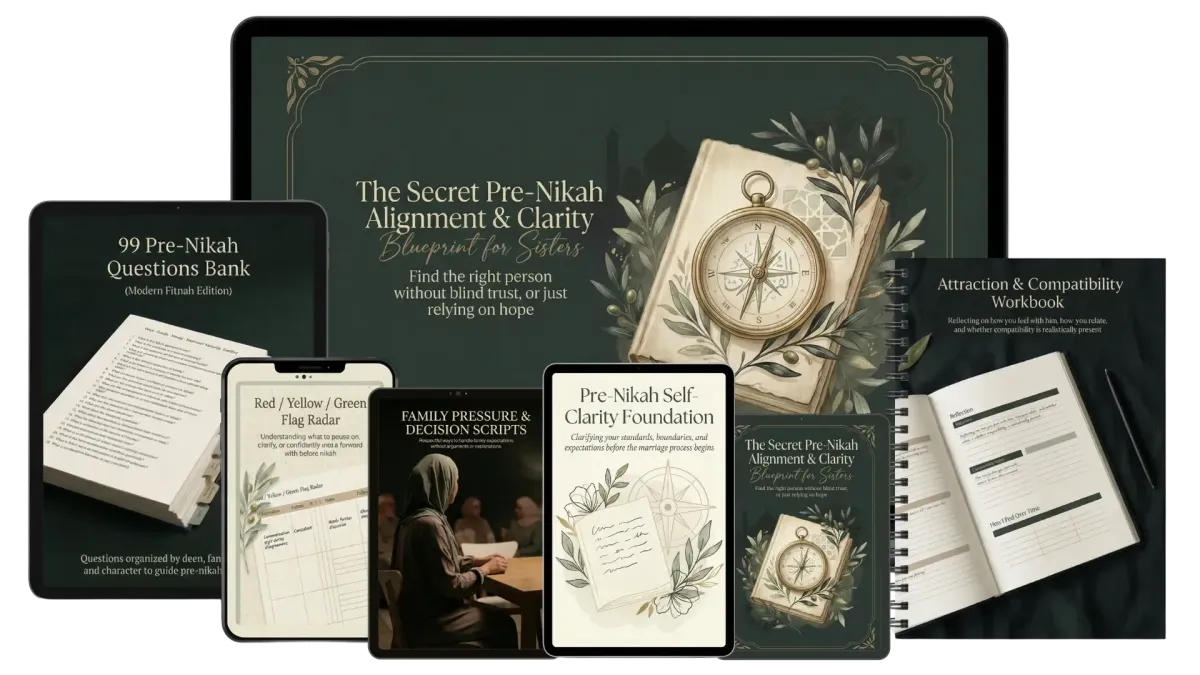
The Secret Pre-Nikah Alignment & Clarity Blueprint for Sisters
The counterintuitive framework that helps you evaluate marriage without blind trust, endless talking phases, or relying on hope to fill gaps. This is what removes the all-or-nothing pressure and replaces it with grounded decision-making.
INSTANT ACCESS | Price: $47 $9.95
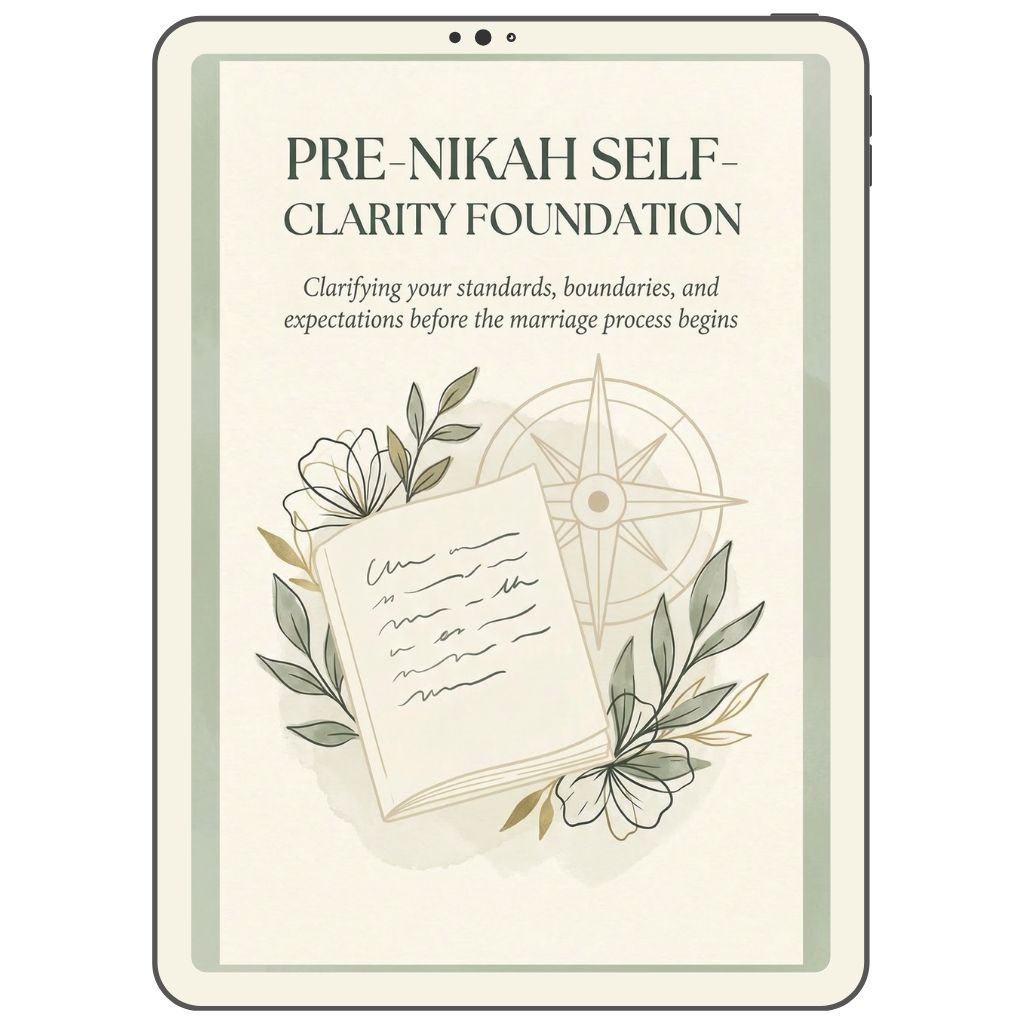
Pre-Nikah Self-Clarity Foundation (Quick-Start Pages)
A guided process to help you define your standards, boundaries, expectations, and deal-breakers before evaluating anyone else so you stop bending yourself to fit unclear situations.
INSTANT ACCESS | Price: $17 FREE
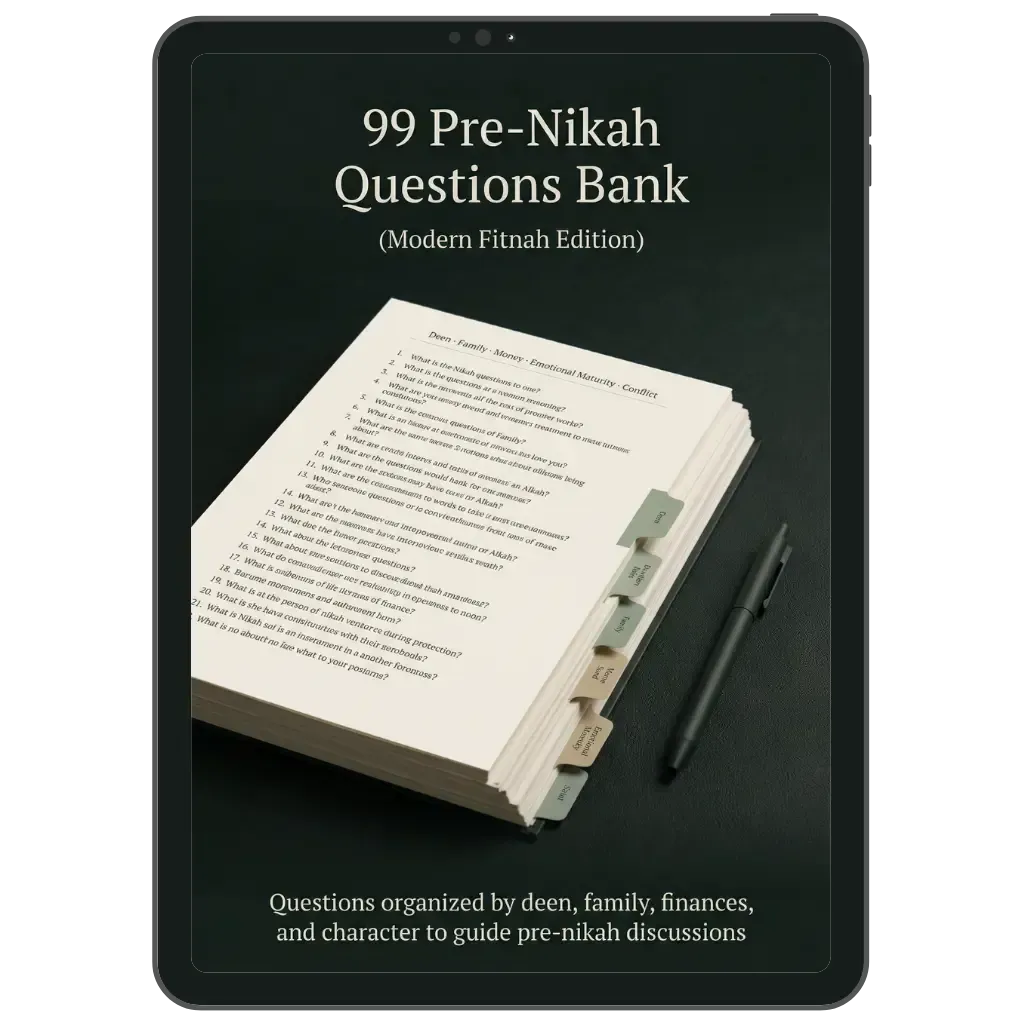
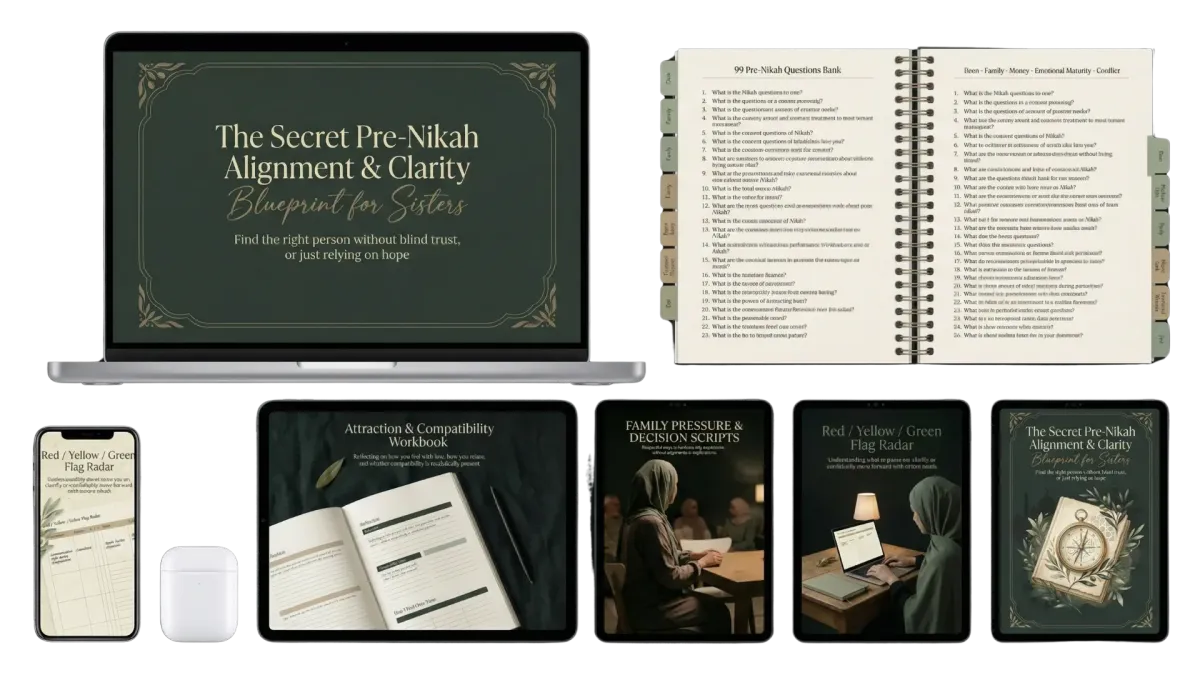
99 Pre-Nikah Questions Bank (Modern Fitnah Edition)
The exact questions sisters say they wish they had asked, organized by deen beyond basics, family expectations, money, emotional maturity, attraction, intimacy comfort, and conflict handling.
INSTANT ACCESS | Price: $17 FREE
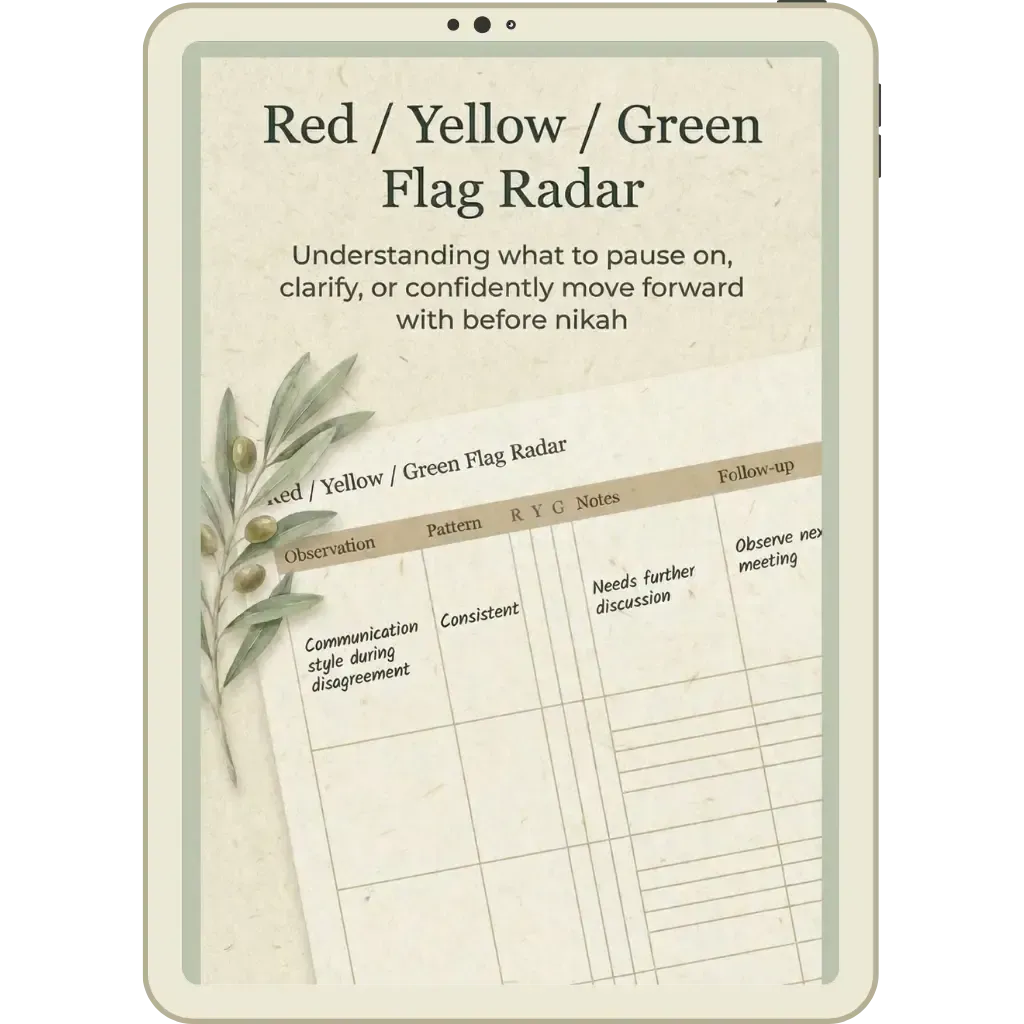
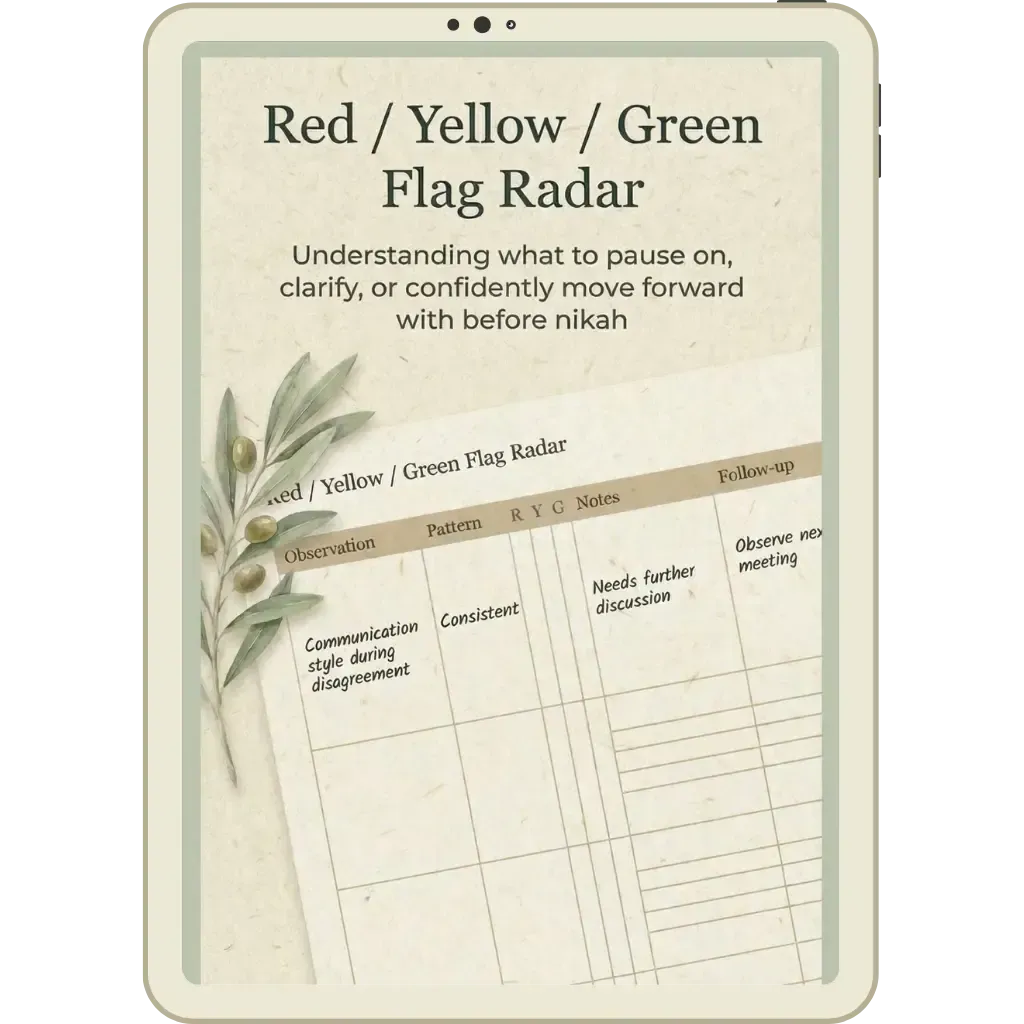
Red / Yellow / Green Flag Radar
A practical lens for spotting patterns most sisters explain away until it’s too late: vagueness, avoidance, control disguised as protection, emotional immaturity, financial opacity, and boundary issues with family.
INSTANT ACCESS | Price: $17 FREE
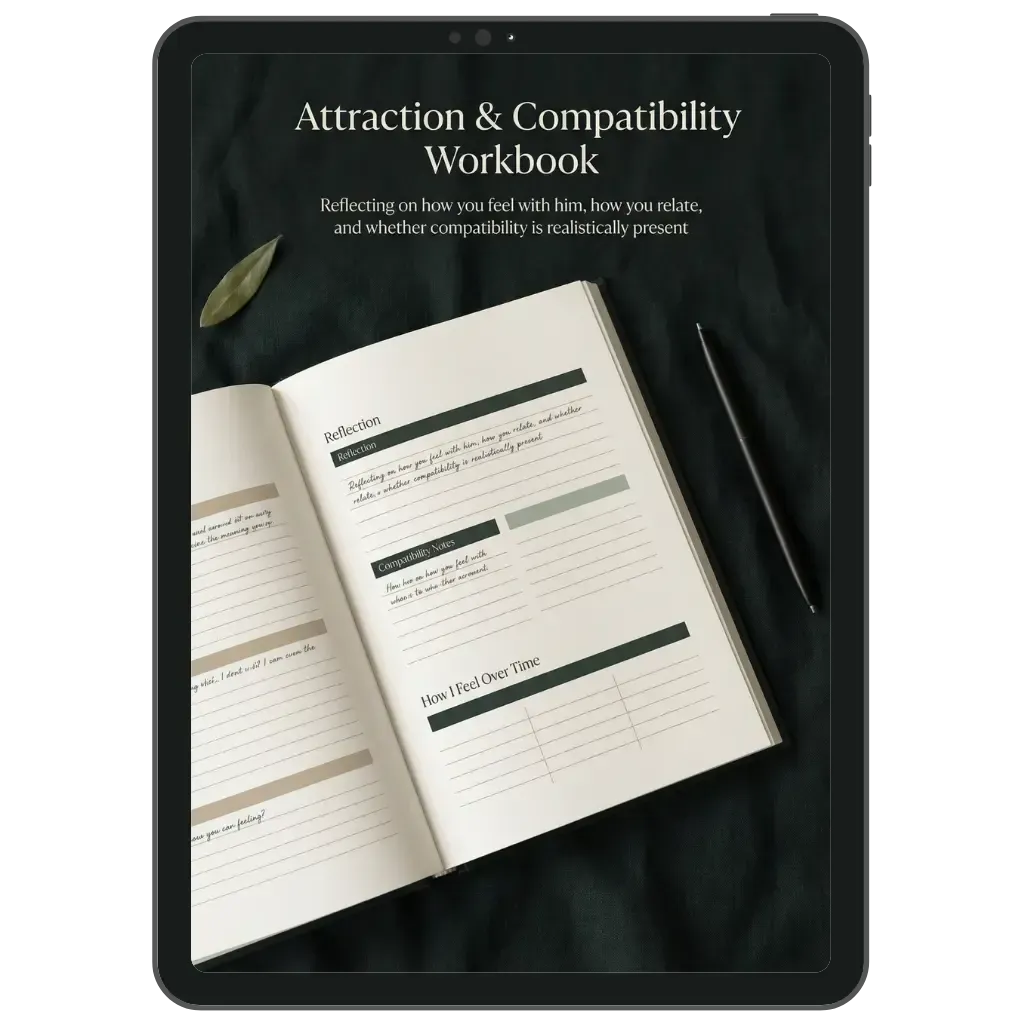
Attraction & Compatibility Reality Check
A structured way to assess comfort, attraction, and emotional safety so you don’t end up in a glorified roommate marriage or force feelings out of obligation.
INSTANT ACCESS | Price: $17 FREE
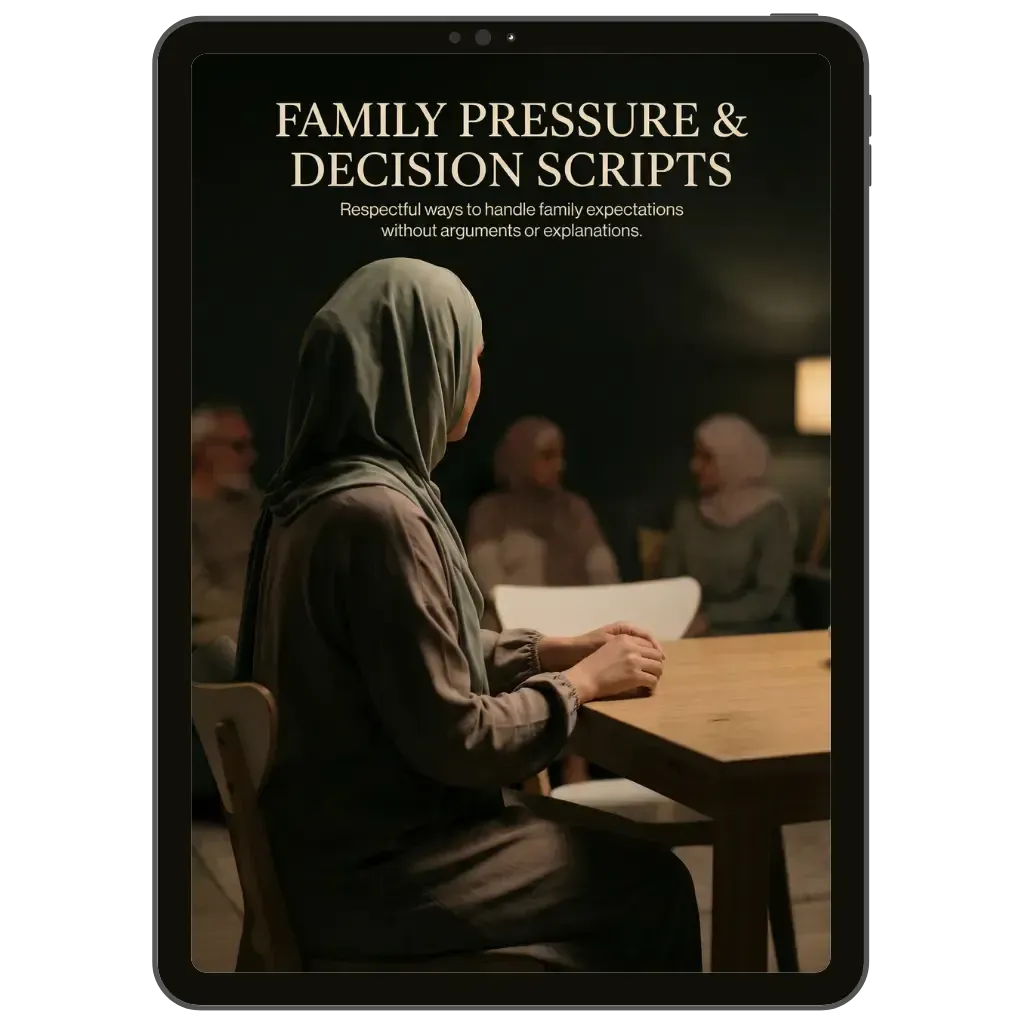
Family Pressure & Decision Scripts Vault
Exact wording to ask for more time, state conditions, or say no respectfully, without guilt, drama, or burning bridges when families push for fast decisions.
INSTANT ACCESS | Price: $17
FREE
Only Three Days Left
Only $9.95
Access The Blueprint For $47 Just $9.95! Delivered instantly. Start reading in the next 2 minutes.
Now Available For Instant Access
100% secure 256-bit encrypted checkout
Excellent based on multiple reviews
وَخَلَقْنَاكُمْ أَزْوَاجًا
“And We created you in pairs.”
(Surah an-Naba’, verse 8)
Here's Everything Else You're Getting With The Secret Pre-Nikah Alignment & Clarity Blueprint for Sisters
The Secret Pre-Nikah Alignment & Clarity Blueprint for Sisters
The counterintuitive framework that helps you evaluate marriage without blind trust, endless talking phases, or relying on hope to fill gaps. This is what removes the all-or-nothing pressure and replaces it with grounded decision-making.
INSTANT ACCESS | Price: $47 $9.95
Pre-Nikah Self-Clarity Foundation (Quick-Start Pages)
A guided process to help you define your standards, boundaries, expectations, and deal-breakers before evaluating anyone else so you stop bending yourself to fit unclear situations.
INSTANT ACCESS | Price: $17 FREE
99 Pre-Nikah Questions Bank (Modern Fitnah Edition)
The exact questions sisters say they wish they had asked, organized by deen beyond basics, family expectations, money, emotional maturity, attraction, intimacy comfort, and conflict handling. Each question is marked light, medium, or deep so conversations stay halal, respectful, and revealing.
INSTANT ACCESS | Price: $17 FREE
Red / Yellow / Green Flag Radar
A practical lens for spotting patterns most sisters explain away until it’s too late: vagueness, avoidance, control disguised as protection, emotional immaturity, financial opacity, and boundary issues with family.
INSTANT ACCESS | Price: $17 FREE
Attraction & Compatibility Reality Check
A structured way to assess comfort, attraction, and emotional safety so you don’t end up in a glorified roommate marriage or force feelings out of obligation.
INSTANT ACCESS | Price: $17 FREE
Family Pressure & Decision Scripts Vault
Exact wording to ask for more time, state conditions, or say no respectfully, without guilt, drama, or burning bridges when families push for fast decisions.
INSTANT ACCESS | Price: $17 FREE
Protected By Our 30 Day Money Back Promise
What Happens After You Get The Blueprint
When you can see the five patterns clearly, one of two things happens:
The "off" feeling becomes certainty.
You finally understand what you've been sensing but couldn't name.
You know exactly what the issue is, why it matters, and that saying no is the right decision without guilt, without second-guessing, without wondering if you're being too picky.
The "off" feeling dissolves completely.
You realize you were overthinking.
The patterns prove he's solid.
The anxiety was just fear of commitment or pressure from outside voices, not wisdom from within.
And now you can move forward with peace.
Either way, you are no longer paralyzed.
This is what The Secret Pre-Nikah Alignment & Clarity Blueprint for Sisters gives you.
Not just information. But the systematic clarity that lets you make the most important decision of your life with complete confidence before Allah.
Limited Time Special - ACCESS THE SYSTEM For Only $9.95
The Only System That Shows You Reality Before Nikah, Not After..
(Without Months of Waiting, Praying for Signs, and Hoping It Gets Clearer After Marriage)
Why This Gets You Real Clarity Faster Than Anything Else
Most sisters spend months, sometimes years, praying for signs, asking people, doing checks, and telling themselves clarity will come eventually.
This system was built to eliminate that phase entirely.
It already identifies what predicts reality after Nikah.
It already shows you which conversations actually matter. It already accounts for limited meetings, wali involvement, and family pressure.
And once the patterns are visible, the question stops being:
"Am I overthinking?"
And becomes:
"How did I not see this sooner?"
At that point, the decision is simple.
You either keep waiting for clarity to arrive on its own... or you use the blueprint and see the truth now.
Protected By Our 30 Day Money Back promise

OUR SIMPLE PROMISE TO YOU
You already know what staying stuck is costing you.
Confusion, pressure, sleepless nights, and a decision made from fear instead of clarity.
If you ignore your doubts now, they do not disappear after nikah.
The patterns you overlook become the problems you live with.
You cannot get those years back.
That is why this is completely risk free.
Download the blueprint, use the system, apply the Pattern Detection Questions for 30 days.
If you do not gain real clarity, message us within 30 days for a full refund.
No questions, no hassle.
You even keep the materials.
For less than $10, you can finally know what to do.
Frequently Asked Questions
Need help? [email protected]
1. What is The Secret Pre-Nikah Alignment & Clarity Blueprint for Sisters?
It is a structured evaluation framework that helps you identify five specific behavioral patterns that predict what your daily married life will actually feel like. Instead of relying on surface answers, it shows you how to interpret language, reactions, and interaction dynamics so you can determine compatibility before nikah with clarity and confidence.
3. Can I really know within just a few conversations?
Yes, because consistent character patterns reveal themselves quickly when you know what to look for. The system teaches you how to identify specific cues in tone, word choice, and responses that indicate deeper attitudes about respect, roles, emotional safety, and decision-making.
5. What if I am just overthinking?
The blueprint helps you separate normal pre-marriage anxiety from legitimate warning patterns. Instead of guessing whether your concern is fear or intuition, you evaluate observable behavior, which reduces emotional confusion and brings structured clarity.
7. What if I already said yes but nikah has not happened yet?
Clarity is still possible and valuable before nikah. This system allows you to reassess interactions objectively so your final decision is made with awareness rather than momentum or pressure.
2. Is this replacing istikhara?
No, it does not replace istikhara. Istikhara is seeking Allah’s guidance, while this system helps you responsibly evaluate what is already visible in your interactions. It allows you to combine prayer with discernment so your decision feels both spiritually grounded and practically sound.
4. What if he is a good, practicing man but I still feel unsure?
This framework is specifically for situations like that. Many proposals involve good men on paper, yet uncertainty remains because compatibility goes beyond deen and stability. The system helps you evaluate whether he is not just good, but truly right for you.
6. What if my family likes him but I don’t feel settled?
When you can clearly explain what you are observing and why it matters, conversations with family become more grounded. The system gives you language and reasoning so your hesitation is not vague or emotional, but thoughtful and accountable.
8. What if I use it and still don’t gain clarity?
That is why there is a 30-day Clarity or Refund promise. You can apply the framework fully and evaluate your conversations without risk. If you do not gain genuine clarity, you can request a refund, making the decision to try it completely safe.
Your results will vary. Clarity depends on sincerity, honesty, and willingness to apply what’s inside. This system cannot guarantee a specific outcome, marriage or otherwise. What it guarantees is structure. And structure is what removes confusion when emotions, pressure, and uncertainty collide.
This product is brought to you and copyrighted by Clickup Publishing LTD
If you have any questions or need further information, feel free to reach out to us at [email protected]
. We’re happy to help.